Hands-Free Workshop
Hands-Free Workshop
Our Hands-Free Workshop is about much more than learning to use your forearms and elbows. It is about discovering a different way of working – one that allows you to move more freely, use your body more efficiently and create treatments that feel effortless for both you and your clients.
Massage is one of the most rewarding careers there is – but it is also physically demanding. Many talented therapists who haven’t been trained in good body mechanics and hands-free techniques in their foundational training, eventually experience aching thumbs, sore wrists, tired shoulders or persistent back pain, often accepting these as simply “part of the job”. We believe they do not have to be.
At the School of Bodywork, therapist longevity lies at the heart of everything we teach. We believe that the way you move around the treatment table is every bit as important as the techniques you perform. By learning to use your body weight, posture, breath and movement more effectively, you can often achieve better results while using considerably less effort.
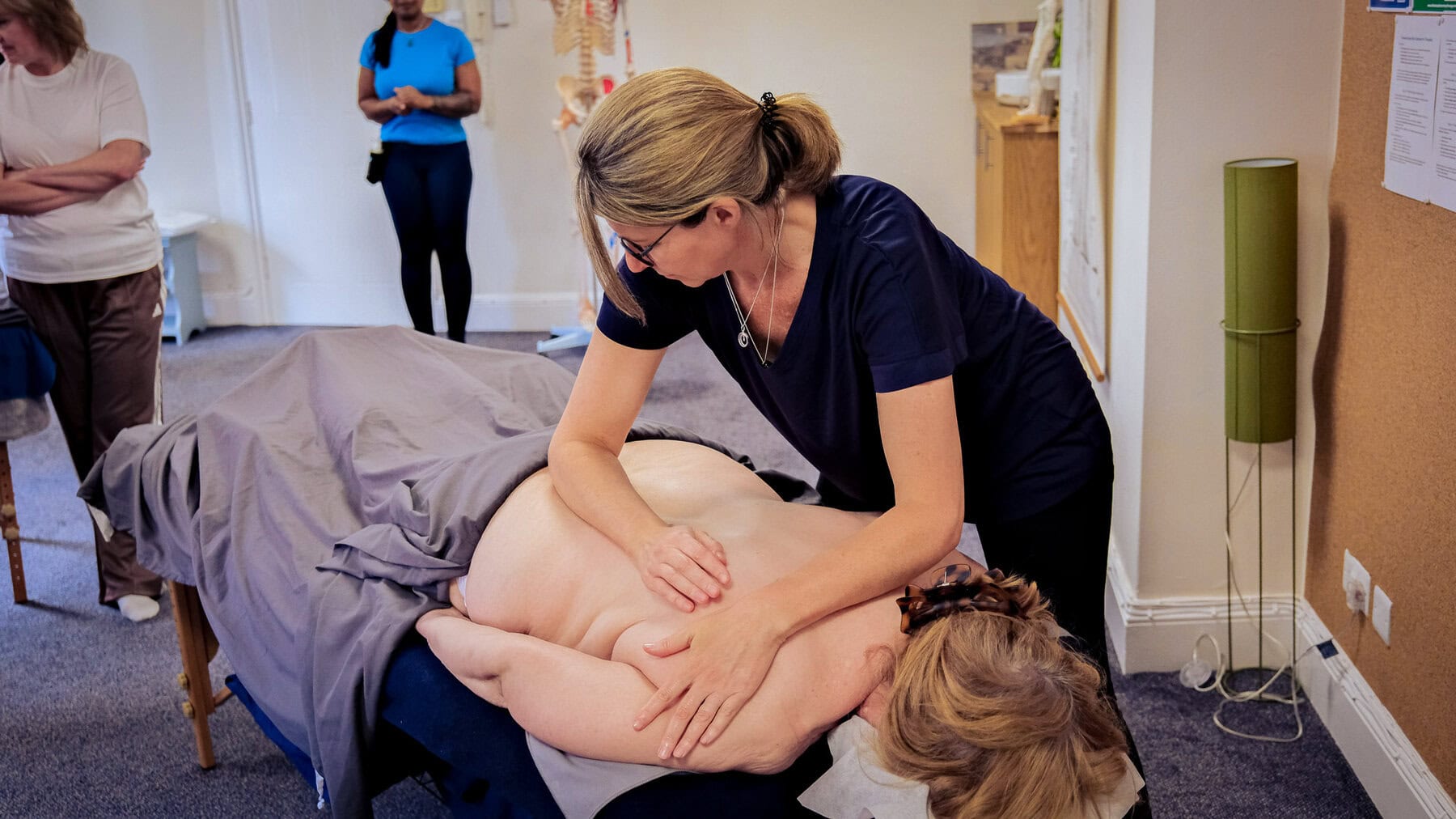
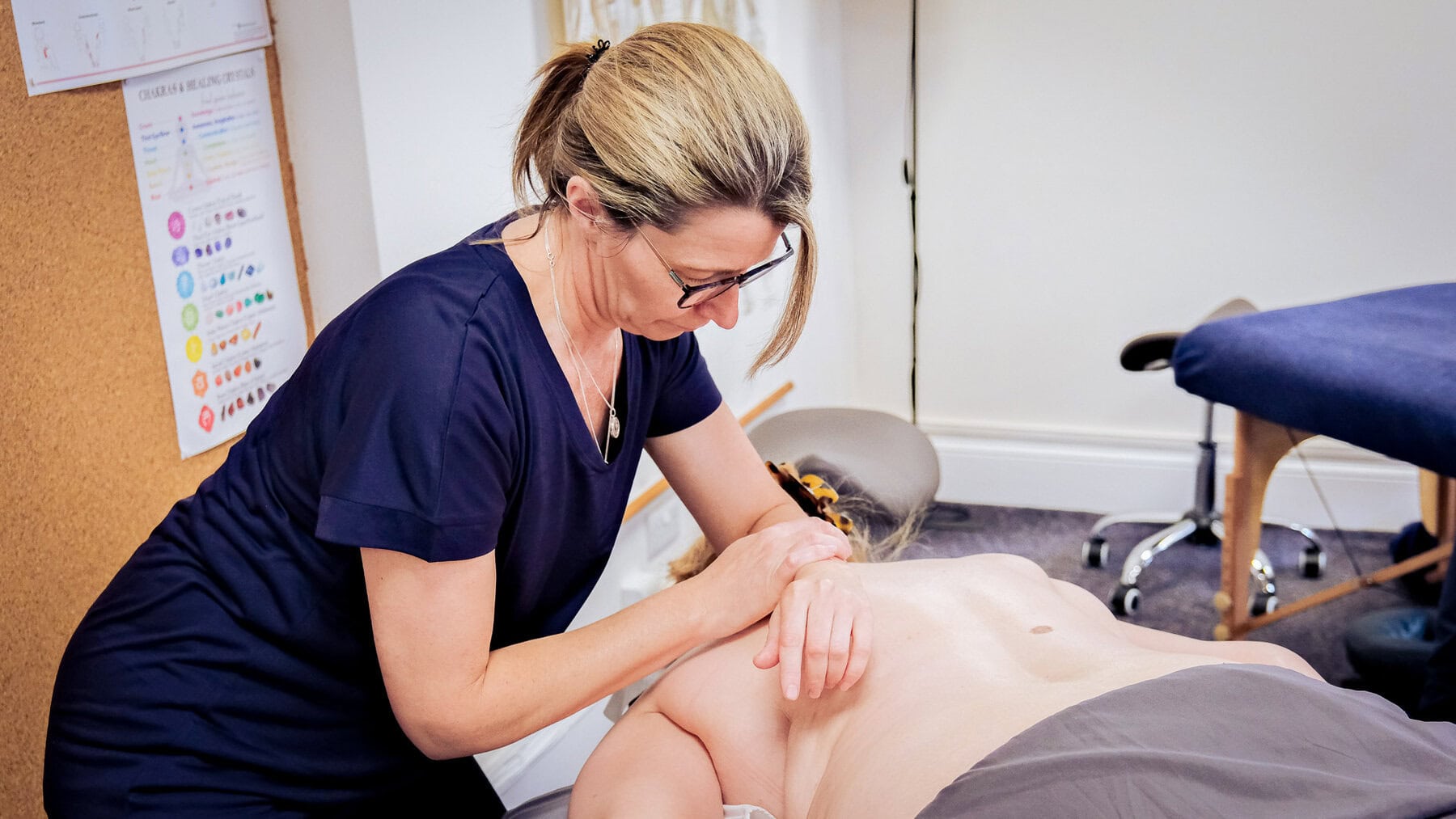
Hands-free techniques naturally form an important part of this philosophy. They allow pressure to be transferred through larger, stronger parts of your body, reducing strain on your hands and wrists while creating broad, comfortable contact that many clients find deeply relaxing. Yet this workshop is not simply about replacing hands with forearms—it is about developing rhythm, flow, connection and confidence in the way you work.
Whether you are newly qualified and want to establish good habits from the very beginning, or you have been practising for many years and are looking for ways to reduce fatigue, this practical workshop will help you move with greater ease, protect your own body and rediscover the enjoyment of giving massage.

Why you should train with us
At the School of Bodywork, we believe the therapist is every bit as important as the treatment they provide.
Throughout this workshop we focus on sustainable practice, helping you develop movement patterns that reduce strain while improving the quality of your treatments. Rather than teaching isolated hands-free techniques, we encourage you to understand how posture, balance, bodyweight, rhythm and practitioner presence all work together to create treatments that feel natural and effective.
Many therapists discover that improving the way they move transforms not only their own comfort but also the experience they create for their clients.
Course overview
This practical one-day workshop explores body mechanics, therapist movement and hands-free massage techniques designed to support career longevity.
You will learn how to move more efficiently around the treatment table, use leverage instead of muscular effort and integrate a variety of forearm, elbow and bodyweight techniques into your existing treatments.
The emphasis is not on working harder or deeper, but on working more intelligently.
Course syllabus
Throughout the workshop you will explore:
- Efficient body mechanics for massage therapy.
- Posture and positioning during treatment.
- Using bodyweight and leverage effectively.
- A variety of hands-free techniques using forearms, elbows and body movement.
- Strategies for reducing fatigue and repetitive strain.
- Improving treatment rhythm and flow.
- Developing practitioner presence.
- Working deeper without working harder.
- Integrating hands-free techniques into your existing massage style.
Entry requirements
Participants should hold:
- A minimum Level 3 Massage qualification.
- A minimum Level 3 Anatomy, Physiology and Pathology qualification.
Course Format
- One full practical training day.
- Demonstrations followed by supervised practice.
- Individual feedback on your body mechanics and movement.
- Plenty of opportunities to refine techniques throughout the day.
This highly practical workshop is designed so that you leave with skills you can begin using immediately in your clinic.
Continue Your Learning
The principles explored in this workshop underpin many of the courses taught at the School of Bodywork.
If you would like to build upon these movement skills, you may also enjoy our Deep Tissue & Advanced Massage Techniques workshop and our Functional Body Series, where intelligent body use, therapist longevity and clinical reasoning continue to play a central role in every aspect of treatment.
Assessments
There is no formal assessment.
Learning takes place through practical participation, individual feedback and guided exploration throughout the workshop.
A CPD Certificate of Attendance is awarded upon successful completion.
Qualification & Accreditation
Students receive a Certificate of Attendance recognising their continuing professional development.
The workshop complements a wide range of massage and bodywork modalities and supports therapists in developing a more sustainable way of working.
FAQs
Does this course focus on deep tissue work?
No. While you will learn how to work deeper into the tissues when appropriate, the heart of this workshop is movement, rhythm, flow and connection. The emphasis is on using your own body more effectively rather than simply applying more pressure.
Because our workshops are always taught in small groups, we also encourage you to explore ways of adapting the techniques so they integrate naturally into your own style of practice.
I am not very flexible. Do I need to be?
Not at all. As long as you are comfortable moving around the treatment table, you will be absolutely fine. The purpose of this workshop is to help you move better and feel more comfortable throughout your treatments. We will always help you adapt movements and techniques to suit your own body.
Course Date:
Saturday 7 November 2026
Course Time:
10:00 am
-
4:00 pm
Location:
The workshop takes place in Exeter, Devon, UK.
Course Fees:
Full Course Fee: £175
Tutor / Tutors

Louise Mockford has always been passionate about helping therapists enjoy long, fulfilling careers without sacrificing their own bodies in the process. Throughout her teaching she places great emphasis on efficient body mechanics, therapist wellbeing and developing treatments that feel effortless rather than exhausting.
Louise encourages therapists to discover their own natural movement style, helping them build confidence, reduce strain and create treatments that feel fluid, connected and enjoyable to perform.

Therapists often tell us this workshop is one of the best investments they have made in themselves. Many notice an immediate reduction in fatigue, greater confidence using their body and a renewed enjoyment of giving massage. Quite simply, they finish the day feeling that massage has become easier.