
Cranial and TMJ Training
Explore our Cranial & TMJ Training
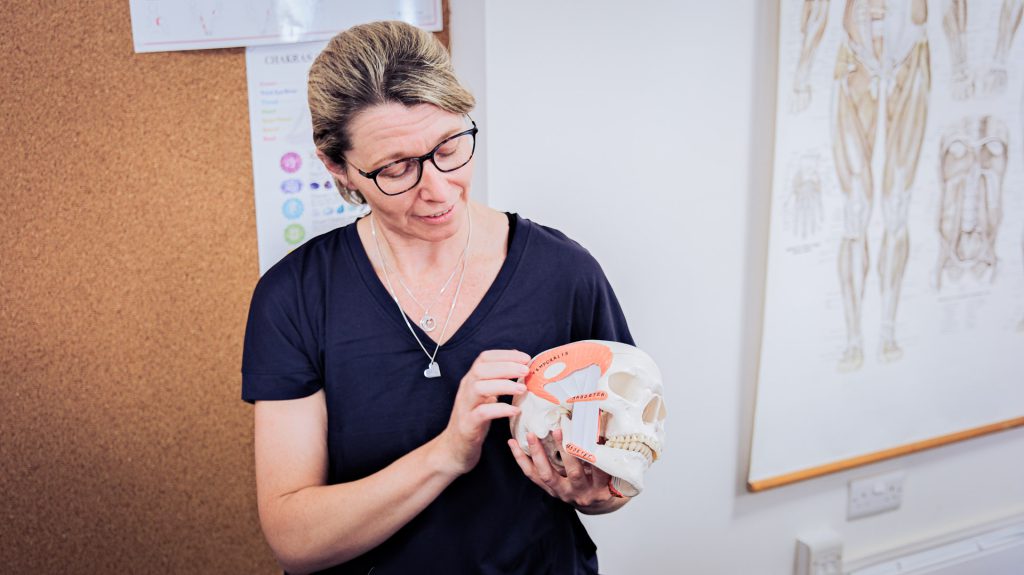
Level 1 – Foundations of Cranial and TMJ Work
This course introduces you to working with the cranium and jaw in a way that may feel very different from more traditional massage approaches. You will begin to explore more subtle techniques, learning how to engage with the tissues of the face, jaw, and skull through the fascial network.

Level 2 Cranial and TMJ: Integration Through the Body
Throughout the course, we will explore the fascinating relationships between the cranium, temporomandibular joint (TMJ), the pelvis, and sacrum. You will learn how a broader treatment perspective can often create more meaningful and lasting change for those suffering with these very common and often debilitating symptoms.
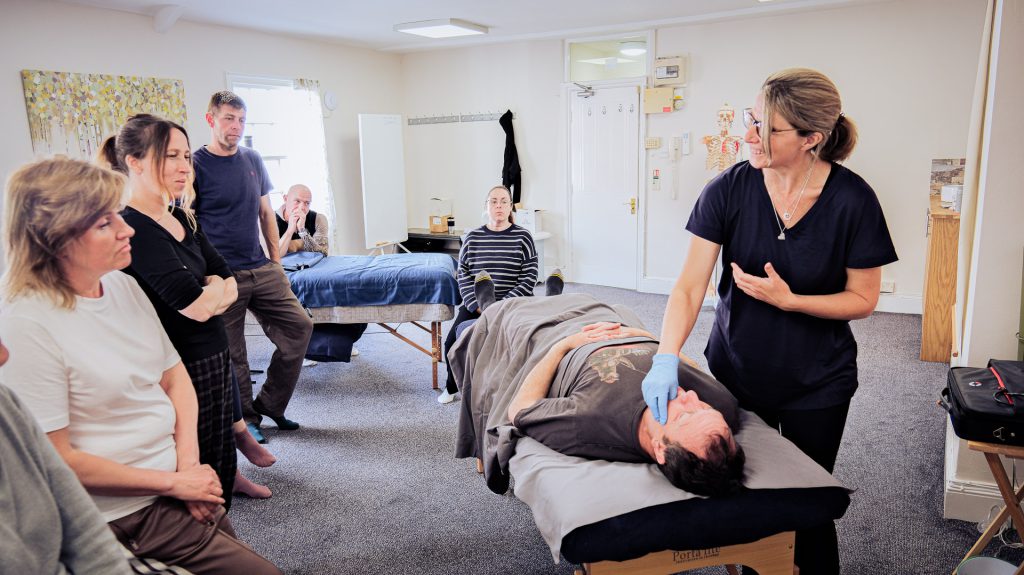
Level 3 Cranial and TMJ: Advanced Practice
This course focuses on clinical application – supporting you in working with more complex presentations and clients who may not have responded to more general approaches. You will explore how to adapt your work in real-world scenarios, drawing on everything you have learned in the previous levels.
Cranial and TMJ-related issues are some of the most common – and often most frustrating – conditions that clients present with.
Jaw pain, clicking or locking, tinnitus, chronic headaches, facial tension… these symptoms can be deeply disruptive to everyday life.
And yet, many clients struggle to find meaningful, effective support. This is where your work as a therapist can make a profound difference.
Our Cranial and TMJ training pathway has been carefully developed to equip you with the skills, understanding, and confidence to support these clients in a way that is both effective and deeply considered.
From the very first workshop, you will learn techniques and approaches that you can take straight into your practice – helping clients who may feel they have run out of options.
Developed and taught by Louise Mockford, who specialises in this work, this training is rooted in a fascial, whole-body perspective. It moves beyond isolated treatment of the jaw to explore how the cranium, face, and TMJ relate to the entire body, with a strong emphasis on the nervous system and a holistic perspective throughout.
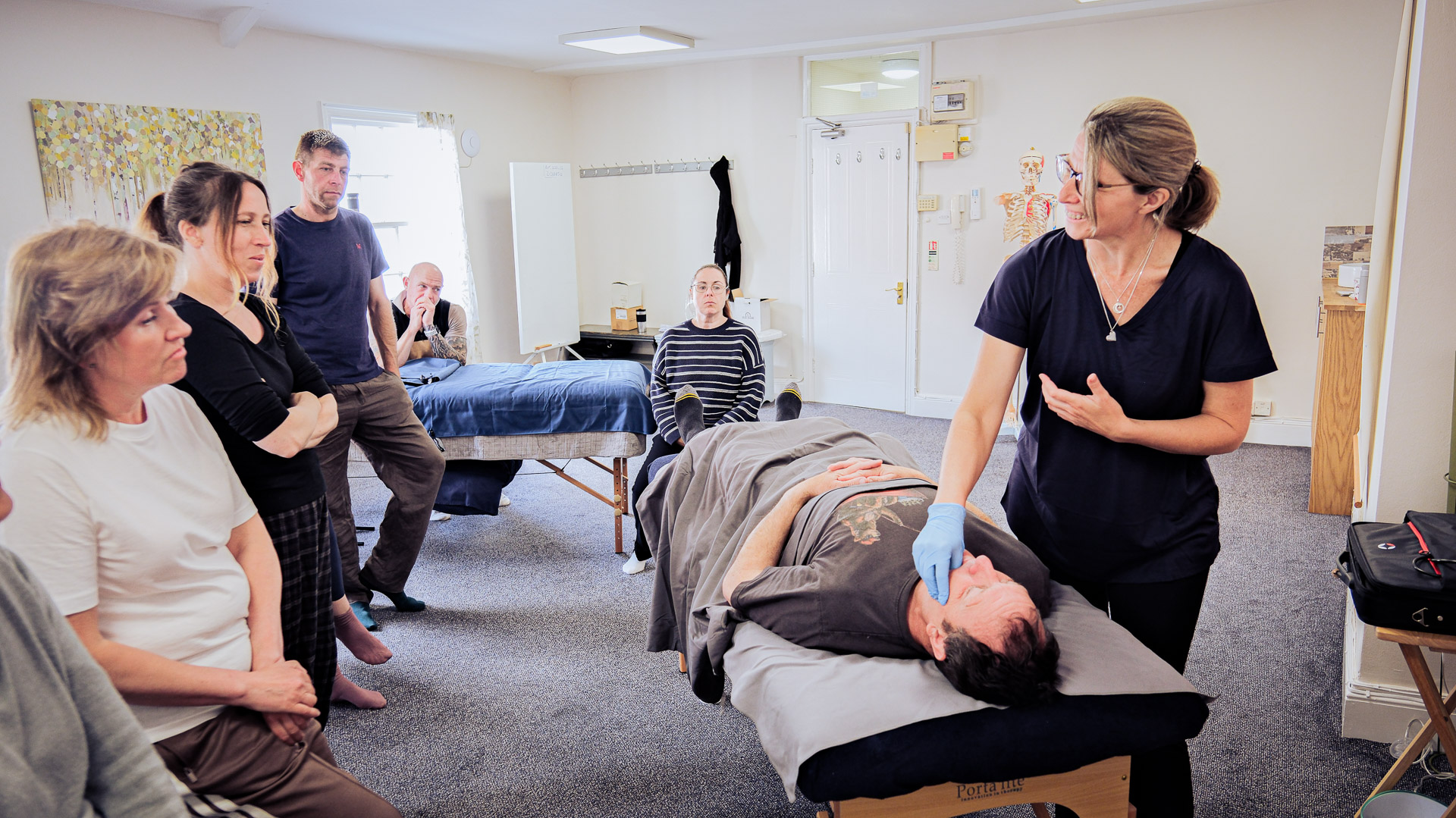
A Progressive Learning Journey
Your Cranial and TMJ Training begins with Level 1, giving you plenty of effective tools and a great foundation to help many of your clients.
However, if you find you wish to specialise more in this field, you are now able to take further training with us as a structured pathway designed to support your development over time – both in your technical skills and in your ability to feel, listen, and respond through your hands.
Each level builds on the last, deepening your understanding and refining your touch.
All levels are delivered through a blended learning approach, with pre-course online theory designed to give you the knowledge and context before you arrive, allowing your in-person training to focus on hands-on practice, integration, and skill development.
Access to the online theory will be provided one month before your course date. Please ensure this is completed prior to attending the in-person training, so you can get the most from your practical experience.
Booking
Each level is priced as follows:
- Full price: £345
- Sign up for all 3 Levels for only £960 and save £75.
A deposit of £175 secures your place, with the remaining balance payable one month before the course date.
Who Is This Training For?
This training is ideal for qualified therapists who:
- Want to support clients with TMJ-related issues more effectively
- Feel unsure how to approach jaw, facial, or cranial work
- Are interested in a more subtle, responsive, and fascial-based approach
- Want to deepen their understanding of the nervous system in hands-on work
Have an interest in working holistically with clients
A Different Way of Working
Across all levels, this training is underpinned by a consistent philosophy:
- The body is not a collection of separate parts – it is an interconnected whole
- The fascia is a continuous web that influences everything
- The nervous system plays a central role in how symptoms are experienced and expressed
- There is no one-size-fits-all approach – each treatment is individual
You will not be taught routines.