Level 2 Cranial and TMJ: Integration Through the Body
Level 2 Cranial and TMJ: Integration Through the Body
Look beyond the jaw. Explore the relationships. Treat the person, not simply the symptom.
Cranial & TMJ Level 2 takes the foundations developed in Level 1 and begins to widen the lens.
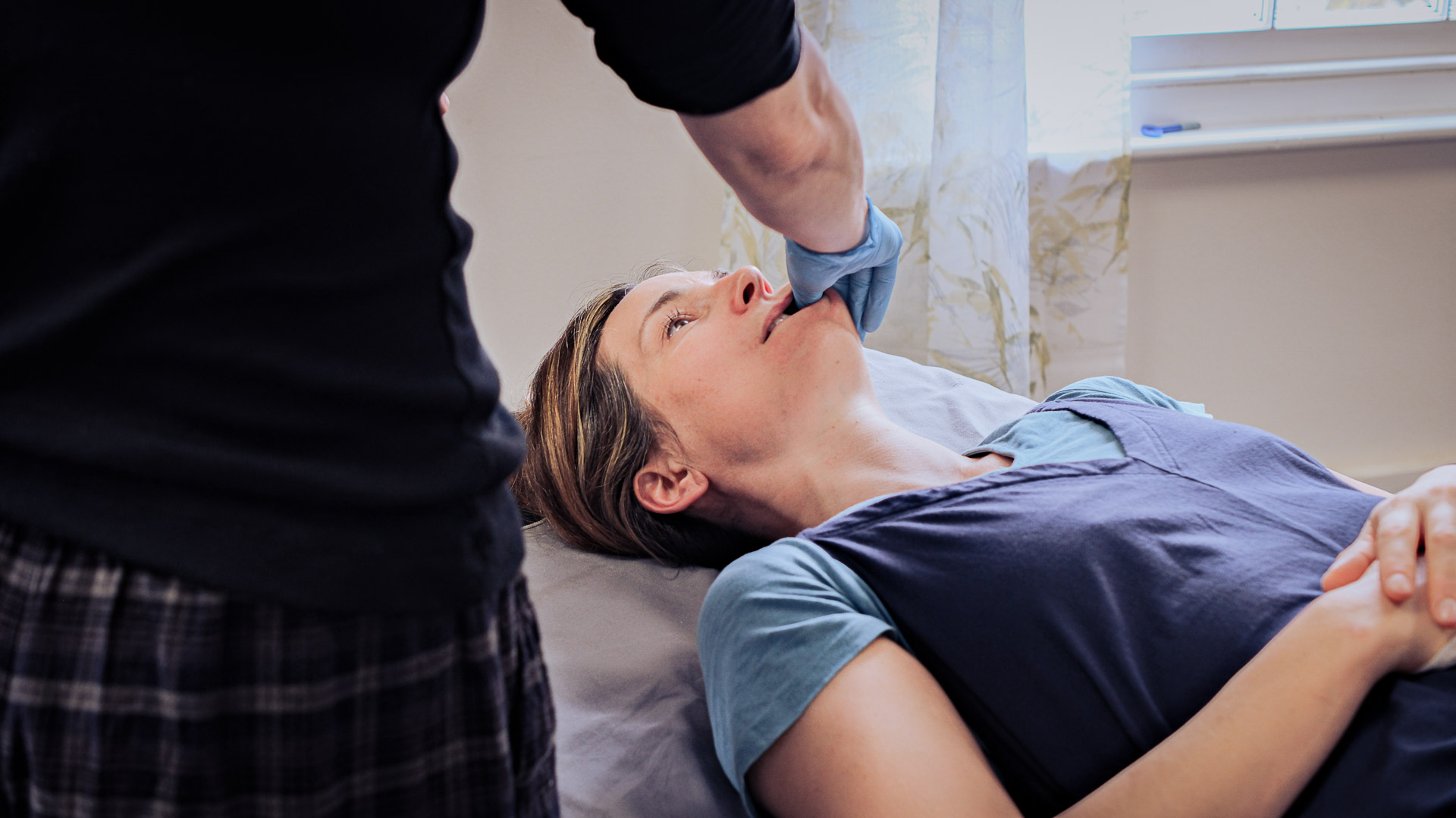
We will still work extensively with the cranium, jaw and the techniques that support this work, but at this level we begin exploring what happens when we stop viewing the TMJ as an isolated joint and start considering it within the context of the whole person.
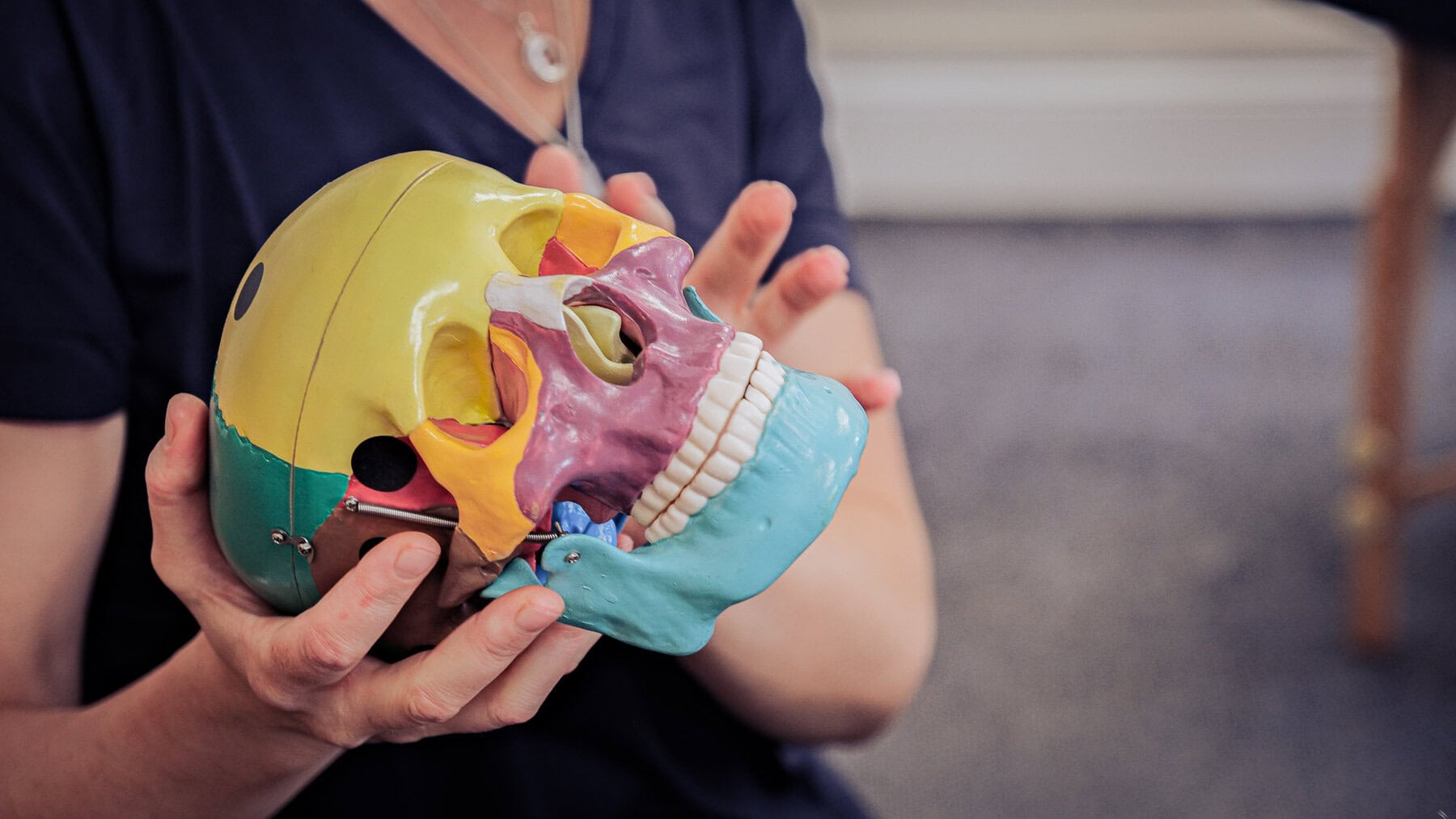
The jaw is involved in far more than chewing. It participates in breathing, swallowing, speaking, expression and protection, while existing in constant relationship with the cranial base, tongue, hyoid, cervical spine, shoulders and breath. All of this takes place within a nervous system that is continually responding and adapting to life.
Throughout Level 2 we begin moving beyond purely mechanical explanations of dysfunction. Rather than simply asking “Which structure is causing the problem?”, we become more interested in patterns, relationships and the way the body has adapted over time.
We will explore the jaw and cranium alongside the hyoid, tongue, neck, shoulders, breath and wider body, while introducing a broader understanding of persistent pain, headaches and migraines, nervous system regulation, stress, dental history and the therapeutic relationship.
There is also a much stronger emphasis on consultation, assessment and clinical reasoning. You will learn to build a more complete picture of the person in front of you, rather than simply treating the symptom they arrive with.
Ultimately, Level 2 is about integration – developing greater confidence in seeing relationships, thinking more broadly and adapting your treatment to the individual rather than following a predetermined routine.
Cranial & TMJ Level 2 is about beginning to see beyond the symptom.
The jaw does not exist separately from the cranium, the cranium does not exist separately from the neck and the person in front of us cannot be separated from the life they have lived.
You do not need to have all the answers.
Instead, this level encourages you to observe more, feel more, ask better questions and become increasingly confident working with complexity.
Following Level 2, students can continue their learning through Cranial & TMJ Level 3, where we develop this work and clinical reasoning even further.

Why you should train with us
At the School of Bodywork, Cranial & TMJ therapy is never simply about treating the jaw.
We combine detailed anatomy and practical technique with pain science, nervous system awareness, trauma-informed principles and whole-person clinical reasoning.
We do not teach that every asymmetry needs correcting, that clicking automatically means damage or that one part of the body is always responsible for another. Instead, you will be encouraged to remain curious, recognise patterns and consider how different areas of the body continually influence and adapt alongside one another.
Level 2 also places significant emphasis on the therapeutic relationship – developing sensitive touch, practitioner presence and the ability to work collaboratively with your client.
Course overview
Cranial & TMJ Level 2 builds directly upon the knowledge and practical skills introduced during Level 1. At this stage, we expand beyond the immediate TMJ and cranium to explore relationships between the:
- Cranium and cranial base.
- Jaw and facial structures.
- Tongue and hyoid.
- Neck and shoulders.
- Breath and upper body.
- Nervous system and pain.
- Wider body.
You will continue developing your hands-on techniques while becoming increasingly confident in assessment, consultation and adapting treatment to different presentations.
The aim is not simply to give you more techniques, but to help you become a more thoughtful and adaptable Cranial & TMJ therapist.
Course syllabus
Building on Level 1, this course expands your understanding of Cranial & TMJ work beyond the immediate jaw and cranium, exploring how these areas exist within the wider body and the individual as a whole.
Throughout the course you will explore:
- The jaw and cranium – developing your understanding of TMJ function, cranial relationships, facial structures and patterns of adaptation.
- Hyoid, tongue, neck, shoulders and breath – exploring the important anatomical and functional relationships between these areas.
- Whole-body relationships – considering wider fascial and structural patterns without reducing them to simplistic cause-and-effect explanations.
- Nervous system and pain – understanding protective tone, persistent pain, sensitisation, stress and nervous system regulation.
- Headaches and migraines – different presentations, relevant jaw and cervical relationships, red flags and appropriate referral.
- Dentistry and the TMJ – considering dental history, orthodontics, occlusion, splints and other dental interventions.
- Assessment and clinical reasoning – developing more detailed consultation and assessment skills and learning to recognise patterns within the client’s wider history.
- Trauma-informed therapeutic practice – exploring consent, communication, client agency, practitioner presence and working sensitively with persistent or complex symptoms.
- Practical Cranial & TMJ techniques – refining your Level 1 skills and expanding your hands-on work into the face, hyoid, neck, shoulders and wider cranial system.
Entry requirements
Students must previously have completed:
School of Bodywork – Cranial & TMJ Level 1
Level 2 builds directly upon the theory, anatomy and practical skills taught at Level 1, so a good understanding of that material is essential before progressing.
Course Format
This is a blended-learning course combining pre-course online theory with two practical classroom days.
The online component allows you to explore the deeper theoretical material before attending, leaving classroom time free for:
- Practical demonstrations.
- Hands-on treatment.
- Assessment and palpation.
- Consultation and clinical reasoning.
- Discussion and case exploration.
- Developing and refining your Level 1 techniques.
- Introducing new approaches involving the face, hyoid, neck, shoulders and wider cranial system.
You do not need to memorise every anatomical detail within the theory. The purpose is to deepen your understanding and help you begin seeing the wider relationships within the body.
Assessments
There is no formal practical examination for Level 2.
Learning is developed through completion of the online theory, discussion, clinical reasoning and supervised hands-on practice throughout the two practical days.
Qualification & Accreditation
This workshop is a Think Tree CPD Approved course. Students receive a Certificate of Attendance recognising their continuing professional development.
Level 2 forms the second stage of our progressive Cranial & TMJ training pathway and prepares students for further advanced study at Level 3.
FAQs
Do I need to complete Cranial & TMJ Level 1 first?
Yes. Level 2 builds directly upon the anatomy, principles and practical techniques taught during our Level 1 course.
Is Level 2 mainly about learning more jaw techniques?
No. There is plenty of practical work and you will develop your existing techniques further, but the biggest progression at Level 2 is beginning to understand the jaw and cranium within the context of the wider body.
Will we still work directly with the jaw and cranium?
Absolutely. They remain central to the training, but we expand our approach to include areas such as the face, hyoid, tongue, neck, shoulders and breath where appropriate.
Do you cover headaches and migraines?
Yes. We explore different headache presentations and the important distinction between headaches and neurological conditions such as migraine. We also cover red flags, scope of practice and when referral may be appropriate.
Is trauma covered?
We explore trauma-informed practice and consider how stress, overwhelm and nervous system regulation may influence protective patterns and the treatment experience.
We do not assume every jaw problem is trauma-related, nor are we providing psychological trauma therapy. The aim is to work sensitively and consider the whole person within our professional scope.
Do you cover dental work?
Yes. Dental history is an important part of Cranial & TMJ work, and we consider orthodontics, extractions, implants, splints, occlusion and other dental interventions within the wider clinical picture.
Course Date:
Monday 2 and Tuesday 3 November 2026 - 6 PLACES LEFT
Saturday 19 and Sunday 20 June 2027
Thursday 2 and Friday 3 March 2028
Course Time:
10:00 am
-
5:00 pm
Location:
The practical training takes place at the School of Bodywork in Exeter, Devon, UK.
Online theory is completed through the School of Bodywork learning platform before attending the practical training.
Course Fees:
Pay £175 to secure your place and remaining balance due one month before the course start date.
Full Course fee: £345
Tutor

Louise Mockford is an experienced bodywork therapist and educator with more than 20 years of clinical experience and a particular interest in Cranial & TMJ therapy, fascia, persistent pain and whole-person bodywork.
Her approach combines detailed anatomical knowledge with cranial and fascial work, pain science, nervous system awareness and trauma-informed principles.
Rather than teaching students to search for faults or impose correction upon the body, Louise encourages curiosity, sensitive palpation and clinical reasoning – helping therapists become increasingly confident in responding to the individual rather than relying upon predetermined treatment routines.
Level 2 particularly reflects this philosophy, encouraging students to look beyond the immediate area of symptoms and appreciate the complex relationships between the jaw, cranium and the rest of the person.

“I have been on a few courses over the years and this has been the most enjoyable. Very supportive and caring. I felt in very good hands.”
AG